Introduction
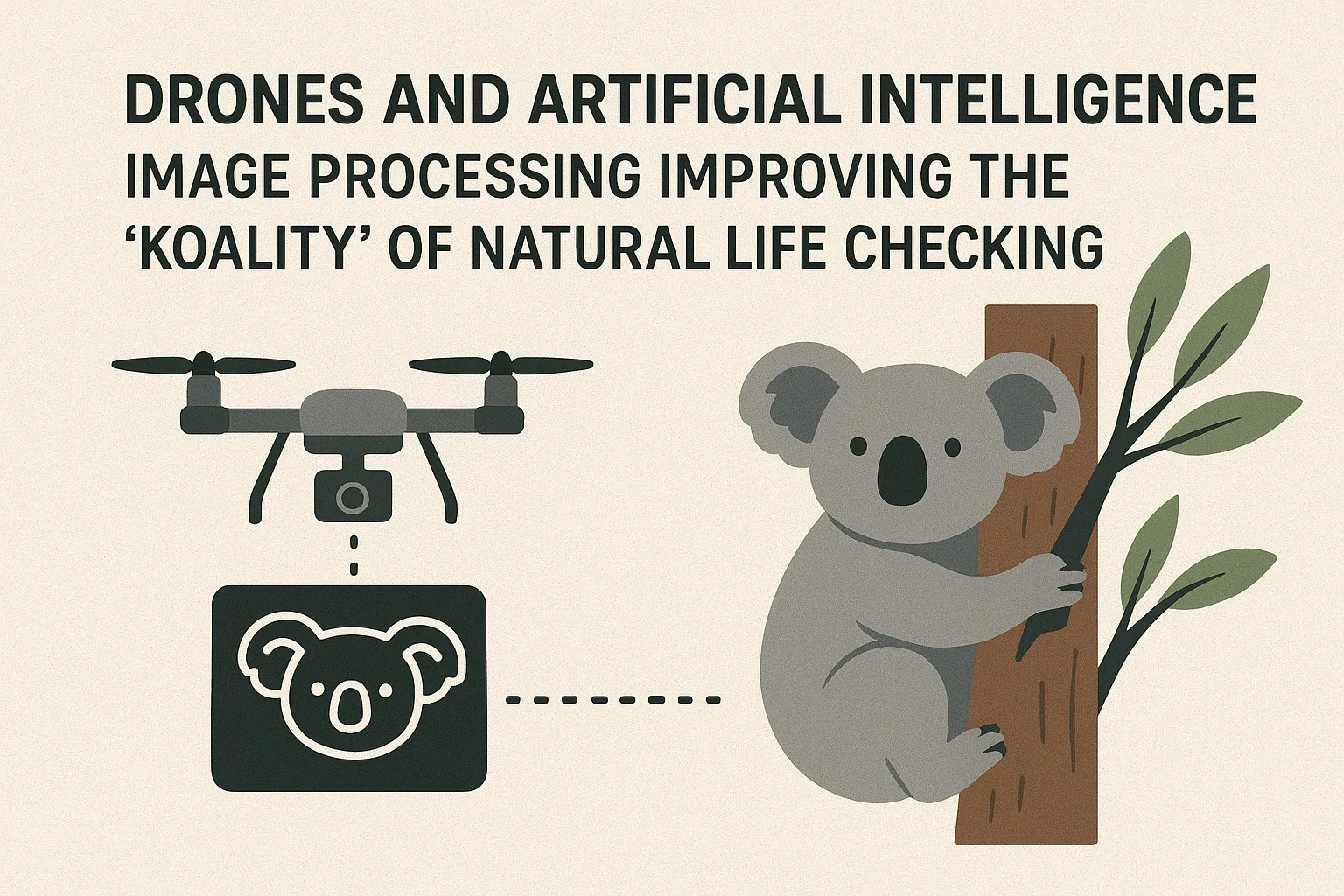
In recent years, the combination of Drones and Artificial Intelligence (AI) has transformed how we monitor and protect wildlife. From tracking endangered species to analyzing forest health, this technology is revolutionizing natural life observation.
Playfully speaking, it’s even improving the “koality” of life — especially for our furry friends like koalas, pandas, and other species that need careful tracking in vast terrains.
How Drones and AI Work Together
Drones equipped with high-resolution cameras and AI-based image processing algorithms can identify, count, and monitor animals in real time.
-
AI Image Processing: Uses deep learning to detect and classify animals in drone footage.
-
Thermal and Multispectral Cameras: Help detect wildlife even in dense forests or low light.
-
Automated Pattern Recognition: Differentiates between species, tracks movement, and identifies habitats.
This fusion eliminates the need for manual tracking, reducing stress on animals and improving accuracy.
Applications in Natural Life Monitoring
-
Koala Population Tracking: Drones detect koalas in treetops using thermal imaging and AI recognition.
-
Forest Health Monitoring: AI analyzes vegetation patterns to assess environmental conditions.
-
Poaching Prevention: Real-time aerial surveillance alerts authorities to illegal activities.
-
Disaster Response: Helps rescue teams locate animals after bushfires or floods.
-
Migration Studies: Tracks movement patterns of birds, elephants, and marine life.
Advantages of Using Drones and AI
-
Non-invasive monitoring
-
Large area coverage in less time
-
High accuracy through data-driven insights
-
Real-time tracking and alerts
-
Cost-effective and environmentally friendly
This technology allows conservationists to gather precise information without disturbing natural ecosystems.
AI-Powered Image Processing Techniques
AI in drone-based wildlife monitoring primarily relies on machine learning and computer vision algorithms.
Key methods include:
-
Object Detection (YOLO, SSD): Identifies animals in drone footage.
-
Semantic Segmentation: Distinguishes animals from vegetation and background.
-
Thermal Mapping: Detects heat signatures of animals for accurate counting.
-
Change Detection: Compares before-and-after images to assess environmental impact.
Case Study: Improving the ‘Koality’ of Koala Conservation
Australia’s devastating bushfires highlighted the need for efficient wildlife tracking.
Researchers used AI-driven drones to scan large forest areas and detect koalas using thermal imaging. The data was then processed through neural networks to distinguish koalas from other warm objects — improving detection accuracy by over 90%.
This innovation drastically reduced manual labor and enhanced the speed of rescue and habitat restoration efforts.
Challenges and Future Prospects
While drones and AI bring tremendous potential, there are challenges:
-
Limited battery life and flight duration
-
Privacy and data ethics concerns
-
Need for high-quality labeled data
-
Legal restrictions in certain areas
In the future, AI-powered autonomous drones could patrol wildlife reserves, automatically analyze data, and alert conservationists — creating a fully automated eco-monitoring ecosystem.
Conclusion
The integration of Drones, AI, and Image Processing is reshaping wildlife conservation. By improving efficiency, accuracy, and ethical observation, this technology truly enhances the “koality” of natural life checking.
From koalas to coral reefs, AI-powered drones are helping us protect what matters most — our planet’s biodiversity.
Related Verified MATLAB & Simulink Projects
Need pre-built, debugged Simulink models with complete parameter initialization scripts and documentation? Explore top related solutions:
Common Engineering Troubleshooting & Q&A
Frequently encountered bugs, solver convergence issues, and implementation questions answered by our engineering mentors:
Recommended Engineering Articles
Need Custom MATLAB / Simulink Implementation?
Our team of PhD engineers build custom simulation plants, train machine learning agents, tune PID/MPC controllers, and deliver complete, executable code with Turnitin reports.