Abstract
A new meta-heuristic called Grey Wolf Optimizer (GWO) inspired by grey wolves (Canis lupus). The
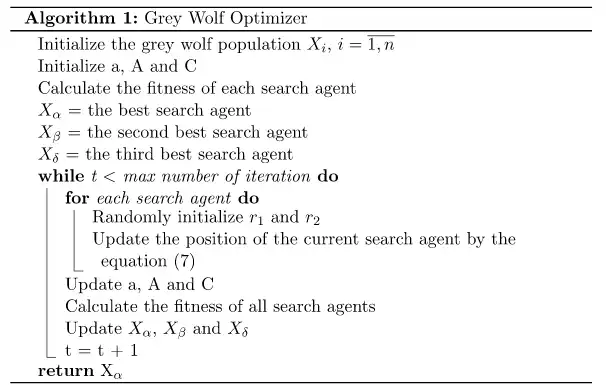
GWO algorithm mimics the leadership hierarchy and hunting mechanism of grey wolves in nature.
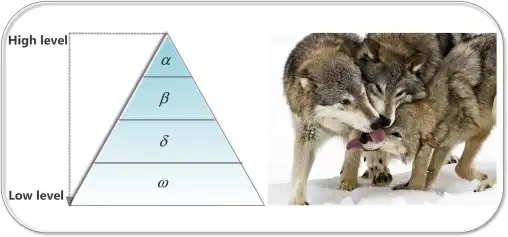
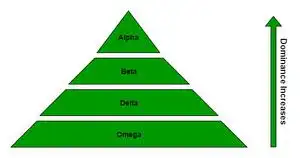
Four types of grey wolves such as alpha, beta, delta, and omega are employed for simulating the
leadership hierarchy. In addition, the three main steps of hunting, searching for prey,
encircling prey, and attacking prey, are implemented. The algorithm is then benchmarked on 29
well-known test functions, and the results are verified by a comparative study with Particle
Swarm Optimization (PSO), Gravitational Search Algorithm (GSA), Differential Evolution (DE),
Evolutionary Programming (EP), and Evolution Strategy (ES). The results show that the GWO
algorithm is able to provide very competitive results compared to these well-known
meta-heuristics. The paper also considers solving three classical engineering design problems
(tension/compression spring, welded beam, and pressure vessel designs) and presents a real
application of the proposed method in the field of optical engineering.